
8 Simple Summer Activities for Kids, Indoors and Out
Summer activities for kids do not have to fill every hour of the school break. These eight ideas for ages 3–6 offer one small project, game, or pretend adventure at a time. Each outdoor idea has an indoor alternative, so the plan can change when the weather does.
Check local weather and air-quality guidance before heading out. Choose comfortable conditions, take shade and water breaks, and move indoors when it is too hot. The American Academy of Pediatrics offers guidance on keeping children safe in extreme heat. These activities do not require staying outside to finish a task.
Pick a summer activity for today
For a short outdoor turn in suitable weather, choose water painting or a texture walk. For a longer make-and-play session, draw an adventure map or set up a pretend campsite. A picture postcard, toy picnic, sound game, or indoor travel office can happen entirely inside.
Eight easy ideas
1. Paint with water in the shade
Offer a broad paintbrush and a small amount of water in a shallow container. On a safe patch of paving, make a line or a hand-sized shape and watch it change as it dries. Stay with your child, keep water away from the walking route, and empty the container afterward.
A younger child can make broad strokes. An older child can compare a thin line with a thick one. If the ground is too hot or conditions are uncomfortable, move inside and draw disappearing “water pictures” with a damp cloth on a wipeable tray instead. Test the surface first.
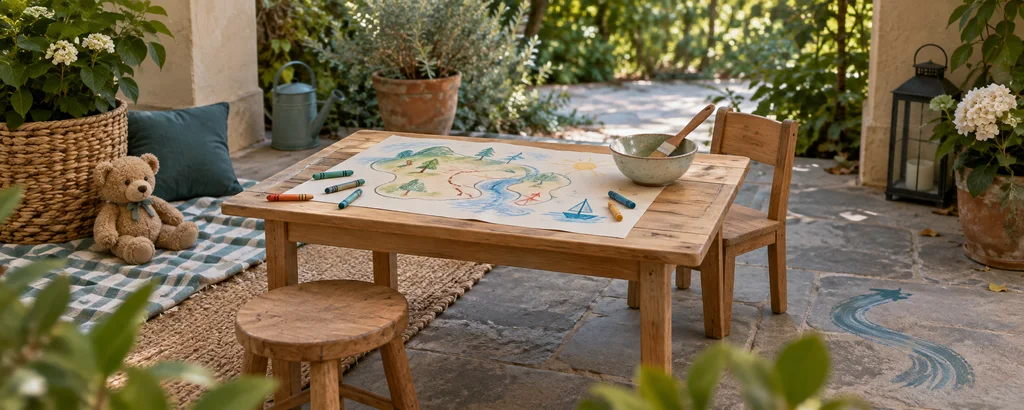
2. Draw a backyard adventure map
On paper, draw two or three landmarks from a familiar outdoor space: a tree, bench, or doorway. Walk the short route together, letting your child point out what the map leaves out. Return to the paper and add one missing detail.
No yard? Make a living-room map with a sofa, book basket, and door. Younger children can place a mark where a toy lives. Older children can invent a symbol for each place. The map is a way to notice the space, not a test of accurate drawing.
3. Host a toy picnic
Lay a cloth on a clear indoor floor or a shady, suitable outdoor spot. Invite two stuffed animals and draw their pretend lunch on paper plates. Your child decides where each guest sits and what happens when one wants something different.
Use pretend food if you want to avoid food storage, allergies, and crumbs during the game. A toddler sibling can seat the toys while an older child creates a picture menu. If the gathering becomes crowded, give each child a separate guest and place setting.
4. Take a texture-noticing walk
Choose a short familiar route and look for something smooth, something rough, and something patterned. Point and describe rather than collecting unknown plants or touching objects you have not checked. An adult can choose appropriate things to feel, such as a clean bench or a large safe leaf.
Back inside, draw one texture with crayons. An indoor version uses a towel, a book cover, and a cushion. If your child does not enjoy touching new textures, looking and describing are enough. Our nature crafts offers follow-up ideas using suitable materials you already have.
5. Send a picture postcard
Fold or cut a sheet of sturdy paper into a large postcard shape. On one side, draw something from today: a game, a tree, or the toy picnic. On the other, an adult can write the child's dictated message to a family member or friend.
Deliver it within the household or save it to send later. No real trip is needed. Older children can add a pretend stamp and address; younger children can choose the crayon colors. A stack of these cards becomes a small record of ordinary summer days.
6. Listen for three sounds
Sit together in a comfortable spot and listen. Can you hear a bird, a distant vehicle, footsteps, or a fan? Name or imitate three sounds, then let your child choose which one to draw or turn into a movement.
Keep the activity short and avoid asking for complete silence. Indoors, an adult can make familiar sounds using a book page, a gentle tap on a box, and a crinkled sheet of paper. Tell your child what is coming if surprise sounds are uncomfortable.
7. Make a pretend campsite
Mark a campsite with a cloth on the floor and place a few toys around it. Draw a “campfire” on paper; no real flame or heating device is needed. Pack an imaginary bag, tell a short story, and decide where each animal sleeps.
You do not need to drape blankets over furniture or build a tent. A flat campsite keeps the setup easy to see and clear away. Let an older child draw a trail map while a younger child arranges the toys. See our imaginative play ideas for more story prompts.
8. Open an indoor travel office
Use scrap paper for picture tickets and line up two stable chairs as a pretend bus. Choose an imaginary destination: the beach, a forest, or the moon. The driver describes what the travelers can see, then everyone swaps roles.
Keep chairs on the floor and let children walk around them rather than climb. If waiting for a role is difficult, make two jobs, such as driver and map reader. A child who wants a quieter role can draw the destination at a table nearby.
Build a flexible summer rhythm
Choose one active idea and one quieter idea, then leave the rest of the day open. Keep a few paper supplies together so starting again is easy. If an activity lasts only five minutes, use the remaining time for ordinary free play instead of adding more instructions.
For days out, our beach activities and outdoor games offer different settings. For days inside, try rainy day activities or generate an idea using the space and supplies available today.
FAQ
What summer activities can kids do without a backyard?
Try an indoor toy picnic, a living-room map, picture postcards, a pretend campsite, or a travel office. A short walk is optional; none of these ideas requires private outdoor space.
What can we do when it is too hot to play outside?
Move to a comfortable indoor space and choose drawing, pretend play, books, or a gentle indoor game. Follow local heat and air-quality guidance rather than completing an outdoor activity at a fixed time.
Do I need a daily summer activity schedule?
No. One planned invitation can be enough. Offer a manageable choice and leave space for rest, familiar play, and changes in interest.