
Quiet Time Activities for Toddlers and Young Kids
Published
Quiet time can mean playing at a gentler pace, not sitting silently or being left alone. For children around ages 2–4, begin with one familiar activity in a comfortable space where you can supervise. Your child may want you involved at first, or throughout.
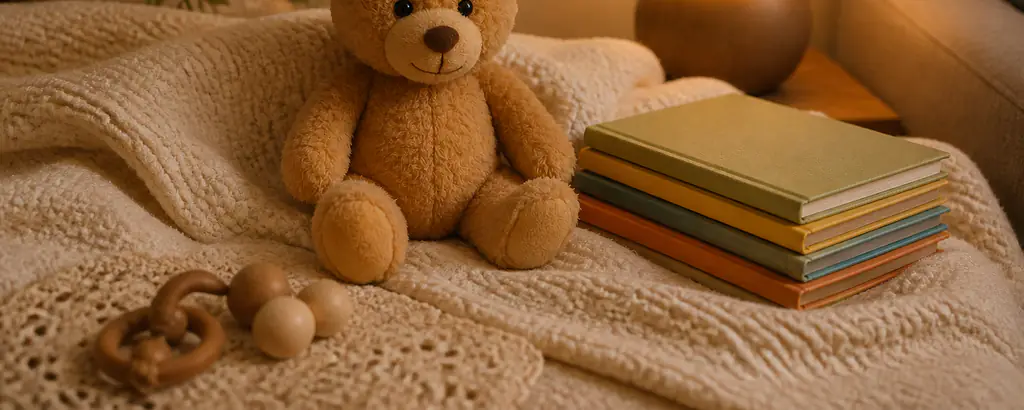
Put aside noisy toys and offer two choices rather than a full shelf. A book and a stuffed animal are enough to start. If your child needs movement before settling, a short walk around the room may fit better than insisting on a seated task.
Look through a book in a new way
Choose a familiar picture book and look for one character across the pages. Notice what the character carries, where it hides, or how its expression changes. Your child can point instead of answer aloud. Next time, let them be the person who turns pages or chooses what to find.
For a child who wants to read independently, put two or three books within reach and sit nearby with your own. Keep the invitation open; this is not a test of how long they can stay occupied.
Give a toy a quiet job
Set a stuffed animal beside a small towel and an open box. Your child can fold a blanket, make a bed for the toy, and tell it a story. The box stays on the floor and is for toys only. To change the game, ask whether the animal wants to rest at home or visit a friend.
Sort something soft
Use a few clean washcloths or socks. Make piles by color, find pairs, or fold each item into a basket. Begin by doing one together. If matching becomes annoying, switch to filling and emptying; the quieter texture and smaller selection still suit the moment.
Draw on one shared page
With paper and age-appropriate chunky crayons, draw a few slow loops or a winding path. Your child adds marks beside, inside, or over them. Talk if they want to talk, and leave pauses if they do not. There is no need to give the picture a subject.
Revisit an easy puzzle
Choose a sturdy puzzle your child already knows and offer a few pieces at a time. Help with the first piece if needed. A challenging new puzzle may be enjoyable on another day, but familiar materials can make this session simpler. Use pieces suitable for your child's age and habits.
End before quiet time becomes a struggle
Offer a clear last action: one more page, tuck in the toy, or put the crayons away. If your child is upset or restless, check what they need rather than adding more tasks. Daytime quiet play and a bedtime routine serve different purposes; see bedtime wind-down ideas for the evening, or sensory activities for more gentle exploration.
Support independent play while staying nearby
Start the familiar activity together, then let your child choose the next action while you stay available. You might turn the first book page or tuck in a toy, then pause to see what they do. Independent play means the child leads some decisions; it does not require playing alone in another room.
If they ask you to join again, respond and simplify the choice rather than aiming for a fixed number of minutes. Two books or one toy-care setup can be easier to return to than a whole tray of unfamiliar materials. For preschoolers who enjoy hands-on tasks, try our fine motor activities.
FAQ
Does quiet time replace a toddler's nap?
This guide offers play ideas, not advice to drop a nap. Fit quiet play around your child's existing rest needs and discuss sleep concerns with their pediatrician.
What can my child do quietly without small craft supplies?
Look at sturdy books, sort washcloths, care for a stuffed animal, or use chunky crayons with supervision. Beads, buttons, and threading cords are not necessary.