
Sensory Activities for Toddlers with Simple Materials
Published
Sensory play can be as simple as feeling a washcloth, hearing paper rustle, or watching water move between cups. You do not need a tub of tiny materials. These sensory activities for toddlers around ages 2–4 offer a few different experiences, with an adult actively supervising.
Let your child decide how closely to explore. Watching, pointing, or using a tool instead of touching a texture are valid ways to join. Do not insist on a material that feels unpleasant to them.
Begin with materials your child can handle
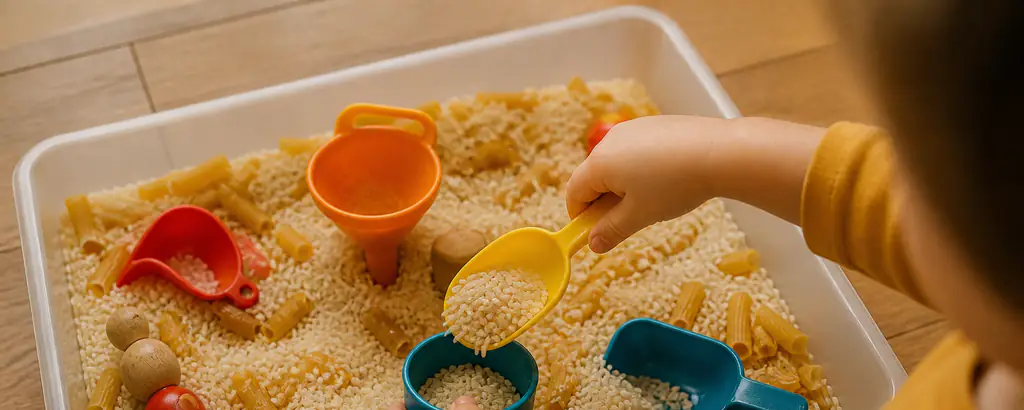
Choose sturdy, age-appropriate objects without detachable small parts. Skip loose rice, dried beans, beads, buttons, and similar fillers for children who may put them in their mouths. Water beads are unnecessary; the CPSC advises keeping them out of environments with children.
Start with one texture or action. A crowded tray makes it harder to see what actually interests your child and creates more to collect afterward.
1. Explore a cloth basket
Put two or three clean washcloths with different textures in an open basket. Feel each one together, then let your child fold, stack, or carry them. Describe what you notice without quizzing: “This one feels bumpy.” A toy can choose a blanket, giving the exploration a simple pretend story.
2. Try dry and damp wiping
Offer one dry cloth and one lightly damp cloth, with no bowl of water needed. Wipe a washable tray or large plastic toy, then compare the surfaces. Your child can squeeze the damp cloth with help or watch you make a trail across the tray. Stop if either cloth starts going into their mouth.
3. Roll across two surfaces
Roll a large age-appropriate toy vehicle over a smooth floor and then a flat towel. Notice the different sound and movement. Your child can choose which road to try again. Keep the towel flat and use the activity on the floor rather than raising it into a ramp.
4. Make quiet sounds together
Rub your palms, tap the floor with fingertips, and crinkle a large sheet of paper while holding it. Offer one sound at a time and keep it gentle. Your child can signal “again” or “stop,” or copy with their own hands. Remove paper if it tears into pieces they might mouth.
5. Pour with close supervision
If you can give your full attention, place a little water in a shallow tray on a stable surface and offer two unbreakable cups. Show one pour, then let your child repeat it. Stay within arm's reach, wipe spills promptly, and empty the tray immediately afterward. Shallow water still needs constant supervision; see the AAP's water-safety guidance.
End with the same simple routine
Put the toys in the basket, dry the surface, and wash hands as needed. Save the activity your child chose most often for another day. Our indoor toddler activities offer similar repetition without water, and quiet time ideas provide gentler follow-ups.
If you prefer dry materials today, use a washcloth, sturdy book, or large toy with a familiar texture. For older preschoolers who want more hand-focused tasks, our fine motor activities includes simple folding and drawing without sensory fillers.
FAQ
Can sensory play be low mess?
Yes. A cloth basket, dry-and-damp wiping, or rolling a toy across different surfaces needs little cleanup and no loose sensory-bin filler.
What if my toddler dislikes touching a texture?
Remove it or let them watch from a comfortable distance. Offer a familiar alternative rather than pushing them to get used to it during the activity.