
7 Activities for 2-Year-Olds at Home with Everyday Toys
Published
An activity for a 2-year-old can be one repeatable action: filling a basket, rolling a ball, or putting a toy to bed. Start with a few familiar objects and join your child on the floor or at a suitable low table. You do not need a craft with a finished result.
These seven ideas are invitations, not an attention-span test. Let your child repeat, change the game, or stop. An adult stays close, checks materials, and chooses toys labeled for the child's age. The CPSC recommends keeping small parts away from children under three.
1. Deliver rolled socks
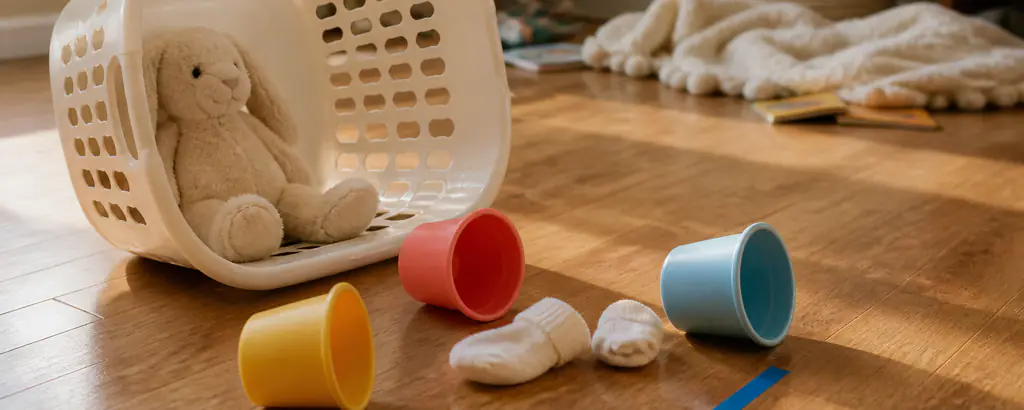
Put a few clean rolled socks in an open basket and a second basket nearby. Show your child one delivery, then let them carry, drop, or move the socks as they choose. For seated play, put both baskets within reach. If matching pairs interests them, add it later; filling and emptying is enough on its own.
2. Stack two cups, then three
Set out sturdy, unbreakable stacking cups. Build a tiny tower and invite your child to knock it down with a gentle hand movement. Take turns adding a cup, or let them place one cup inside another instead. Reduce the number if pieces keep scattering and the game becomes frustrating.
3. Roll a large soft ball
Sit close together with clear floor space between you. Roll the ball to your child and wait for whatever they try next. They may return it, carry it, or send it to a toy. Bring the game closer if the ball keeps escaping, and move breakable objects out of the area.
4. Make a garage from an open box
An adult checks a small cardboard box, removes staples and packing materials, and places it on its side. Show a large toy car or animal moving into the opening. Your child can park, unpack, and repeat. No child needs to climb into or under the box.
If the play continues, draw a road on paper beside it. More toy-sized setups are in our cardboard box activities guide.
5. Wipe a toy with a damp cloth
Offer a lightly damp washcloth and a washable plastic toy without batteries. Show one wipe, then let your child try the wheels, roof, or sides. Keep a dry cloth nearby to finish the job. You can do this without a water bowl or loose sensory materials.
If touching the cloth is unpleasant, let your child tell you which part to wipe or choose a different activity. Our sensory activities for toddlers include other gentle options.
6. Draw beside each other
Place paper on a suitable surface and offer age-appropriate chunky crayons with supervision. Make one large mark, then let your child add whatever marks they want. Draw on your own sheet too. There is no need to ask for a recognizable object or correct the way the picture develops.
7. Read to a stuffed animal
Let your child choose a sturdy picture book and a toy listener. Look for one animal or object on the page, make a sound, or tell a tiny story from the picture. Follow their page turning rather than insisting on reading every word. Put the toy into an open toy-sized bed when the story ends.
When the first idea does not catch on
Try fewer pieces, demonstrate one action, or stay with familiar free play. Adding more instructions usually makes the invitation harder to follow. Avoid loose dried pasta, beans, beads, or small decorative pieces; none is needed for the activities here.
Keep a small basket of the objects your child actually chooses, rather than preparing a new setup every day. For more movement and filling games, see indoor activities for toddlers. If you want a suggestion based on your own materials, photograph the toys and generate a play idea, then check it fits your child's abilities and supervision needs.
For a gentle seasonal variation, try our Halloween activities for toddlers, which uses friendly pictures and familiar toys. Keep the activity brief and skip the holiday theme if your child prefers ordinary play.
FAQ
What activities can a 2-year-old do at home without special supplies?
Deliver socks, nest cups, roll a large soft ball, park toys in an open box, or look at books together. Begin with one action and suitable materials under close supervision.
How long should I expect a 2-year-old to play?
There is no duration this guide requires. Offer a short turn, repeat while your child is interested, and stop or change the activity when they need something else.
How many activities should I plan each day?
You do not need a quota. Familiar play and ordinary routines can sit alongside one or two invitations, adjusted to your child's interest and your available time.