
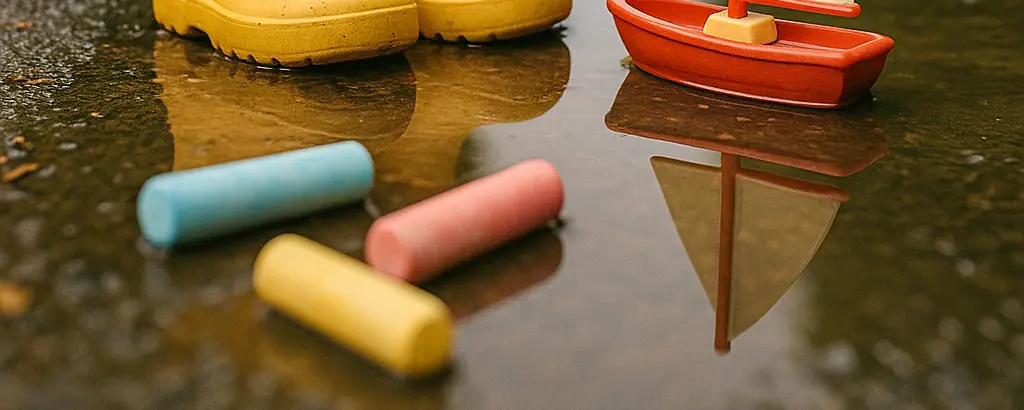
5 Water Play Ideas with Cups, Cloths, and Toys
Published
Water play can begin with two cups and a washable tray. For children around ages 4–6, a small task such as washing a toy or moving water between containers gives the activity a clear start. Choose a time when an adult can stay focused on supervising throughout.
Use a stable setup, unbreakable containers, and cool or lukewarm water. Keep the amount small, wipe spills, and empty containers immediately after play. Young children need close, constant attention around water; the AAP recommends staying within arm's reach of toddlers. A shallow tray is not a reason to step away.
1. Wash a washable toy
Choose a sturdy plastic toy that can get wet and has no battery compartment. Offer a damp cloth and a small container of clean water. Wipe the wheels, roof, or sides, then dry the toy on a towel. Your child can run a wash station for a second toy if the first job catches their interest.
Skip soap if it is not needed. For a less splashy version, dampen the cloth yourself and leave out the water container.
2. Pour into a target cup
Put two cups inside a tray. Begin with water in one and slowly pour it into the other. Try holding the receiving cup still on the tray, using both hands to pour, or switching to a smaller amount. The aim is to explore the action, not avoid every spill.
3. Compare two container shapes
Choose a wide container and a narrow one. Ask what the water level might look like after a transfer, then pour between them. Use an amount that fits easily in both. Notice the changing level rather than assuming the taller-looking amount contains more water.
For children who want to keep comparing, mark a starting level on the outside with removable tape and return to it between trials.
4. Paint a disappearing picture
On a permitted outdoor surface, use a large brush dipped in water to make lines or shapes. Watch how the marks change as the surface dries. Keep the water beside the supervising adult and choose an area that will not become a slippery walking route.
5. Make a toy boat crossing
Use a large, age-appropriate bath boat or a clean unbreakable container that floats. Move it gently from one side of a tray to the other with your hand. Draw destinations on paper outside the tray. Keep the cargo imaginary so no small loose pieces are needed.
Finish the water job completely
Empty the containers, put them away, and dry the floor before moving on. Leaving cleanup until later can leave water accessible. If constant water supervision is not practical today, choose the cloth and rolling ideas in our sensory activities guide instead.
If you want a dry alternative before getting water out, choose a toy picnic, map-making, or pretend campsite from our summer activities. You can keep the seasonal theme without using a water container.
FAQ
Can water play work indoors?
Yes, with a stable setup, active supervision, unbreakable containers, and prompt spill cleanup. A damp-cloth toy wash is a useful alternative when pouring would make too much mess.
Do we need colored water, soap, or special toys?
No. Plain water, cups, cloths, and a suitable washable toy provide several different actions to explore.