
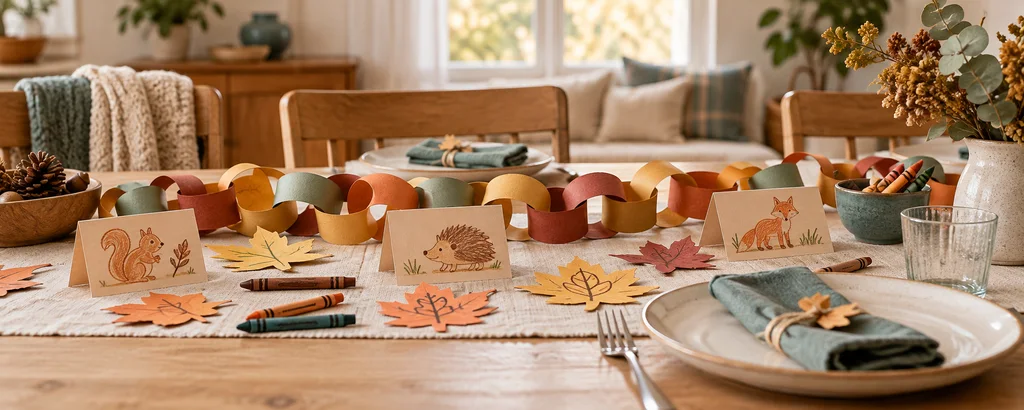
7 Thanksgiving Activities for Kids Before and After Dinner
Thanksgiving activities for kids work best when they fit around the gathering you already have. These seven ideas for ages 3–6 include a useful job before dinner, quiet play while waiting, and a gentle group game afterward. Choose one or two instead of setting up a whole activity schedule.
Put the play area where a designated adult can supervise, away from hot dishes, cooking appliances, candles, and the route people use to carry food. A busy kitchen is not an independent-play space. Crayons, scrap paper, large toys, and a few napkins are enough for most of these ideas.
Before dinner: make something for the gathering
1. Picture place cards
Fold small rectangles of paper so they stand on the table. Invite each child to draw a simple picture for a guest: a cat, flower, or favorite color pattern. An adult can add the person's name. Let the host decide where the cards go before children help set them out.
A younger child can make marks on a card while an older sibling adds a border. If there is no assigned seating, make welcome cards for a side table instead. Keep the task to a few cards at first so a child is not responsible for preparing every place.
2. A gratitude paper chain
An adult cuts broad strips of paper. Invite children and willing guests to draw something they appreciate on a strip: a person, pet, meal, place, or favorite part of their day. Help tape the ends into a loop, then thread the next strip through and join it.
A child can dictate a thought, use a picture, or pass. Avoid asking for a “better” or more impressive answer. Lay the chain along a display surface away from food and flames, without hanging it around anyone's neck. If nobody wants to draw, make a shared pattern chain instead.
3. The napkin delivery team
Give each child one or two unbreakable items approved by the host, such as cloth napkins or paper place cards. Show the route to the table, deliver them together, and return for another small load. Keep all hot, sharp, and breakable items with adults.
Two siblings can take different jobs: one folds napkins and another carries them. Swap if they want to. When the table is ready, say clearly that the delivery job is finished so children do not continue collecting items from the kitchen.
While waiting: play without a big cleanup
4. A paper table neighborhood
On a sheet of paper, draw a road with space for three houses. Let children add a place where a toy animal can visit, a pretend bakery, and a park. Move a large toy along the road or use a finger as the traveler.
Use individual sheets if children want separate spaces, then place them side by side to join the roads. Crayons are enough; glue, glitter, and wet paint are unnecessary near a meal. If the drawing is finished before dinner, ask the traveler to deliver three imaginary invitations. Our low-prep quiet-time ideas offer more options for waiting.
5. A family picture interview
Invite a willing adult or older child to answer one friendly question: “What did you like playing when you were little?” The younger child can draw part of the answer, ask another question, or simply listen. Bring the picture back to the guest afterward.
Keep participation optional and avoid putting a shy child in front of the whole group. If conversation feels tiring, let the child interview a stuffed animal and invent its answer. A quiet corner and familiar toy can be more useful than another organized activity.
After dinner: move or tell a story
6. Follow the gentle parade
Choose a short clear route away from the dining table. One child leads with a slow movement, such as tiny steps or wide arm circles, and everyone who wants to joins in. Change leaders after one circuit. Keep feet on the floor and leave enough space between people.
A seated guest can choose the next movement or lead with hands and arms. Skip elimination and speed. If there is not a clear route, play mirror movements in one spot using our indoor movement guide.
7. Pass-the-story pictures
Draw three simple pictures on separate large sheets: a home, an animal, and a surprise box. One player chooses a picture and starts a story with a sentence, sound, or gesture. The next person chooses a picture and adds what happens next.
An adult can connect the ideas without correcting them. Stop after everyone who wants a turn has had one. For younger children, use just two pictures and let them name what they see. Older children may enjoy drawing the ending while the table is cleared.
A simple plan for mixed ages
Set out place-card paper and crayons before guests arrive. Keep one familiar book and a large toy nearby for children who finish quickly. After the meal, offer either the gentle parade or the story game. Having two clear choices is easier to manage than several stations that all need adult help.
These activities focus on your present-day gathering, gratitude, and play. They do not require costumes or a historical reenactment. Adapt the language and traditions to your family, and let children opt out of sharing personal thoughts in a group.
For outdoor seasonal play on another day, see our fall activities for kids. For siblings of different ages, our shared-play guide explains how to give each child a meaningful role without making the older child the supervisor.
FAQ
What can preschoolers do while Thanksgiving dinner is being prepared?
With a supervising adult away from the kitchen work area, they can make picture place cards, draw a paper neighborhood, or play with a familiar book and toy. Choose a setup that does not need hot, sharp, or breakable materials.
How do I include different ages in one Thanksgiving activity?
Give children related but separate jobs, such as drawing a place-card picture and adding its name or border. Offer turns and let each child choose how much to contribute.
What if my child does not want to share something they are thankful for?
Let them draw, listen, or pass. A gratitude activity should be an invitation; making a pattern chain or playing with a familiar toy is a useful alternative.