
Gardening with Kids: Start with One Pot
Published
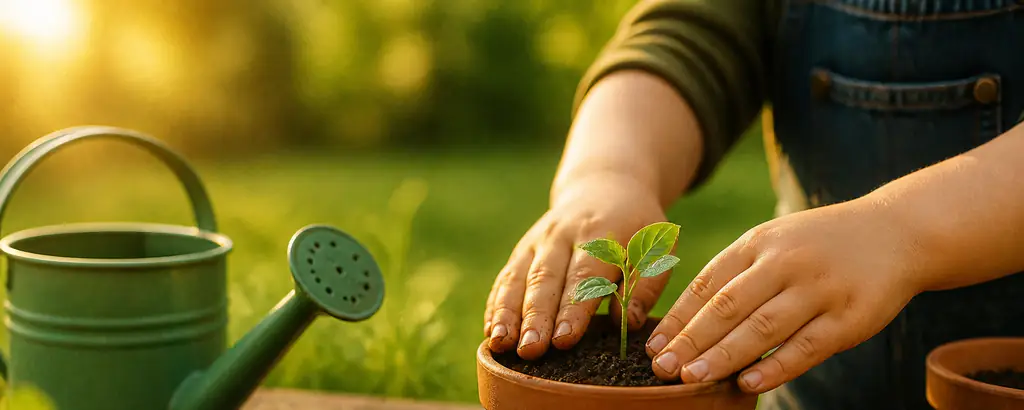
Gardening with kids can start with one container and a plant suited to the space you have. A small project is easier to revisit than a whole garden that needs attention at once. For children around ages 4–6, choose a job they can repeat: checking the soil, helping water, or drawing what changed.
An adult selects plants and growing materials, handles tools, and keeps fertilizers and other garden products out of reach. Use a stable container with drainage and supervise around soil and seeds. Wash hands afterward; do not let children taste unidentified plants or garden materials.
Choose a plant for your actual conditions
Look at how much light the spot receives and read the plant label or seed packet. A small seedling gives children something visible to care for immediately; seeds add a waiting stage. A herb such as basil may suit a warm, bright location, but the right choice depends on your climate and space.
Let your child choose between two suitable options rather than promising that any plant will grow anywhere. Follow the packet's planting depth and spacing instead of guessing from seed size.
Give the pot a name and a label
Before planting, draw the plant on a large paper label or make a simple sign to keep beside the pot. Your child can name the project and choose who will check it with them. Keep small markers and pointed sticks away from younger children.
For a shared family pot, divide jobs: one person checks, another helps water, and another draws the next diary picture. Adult oversight still matters even when a child calls it their plant.
Make watering a check, not a daily rule
Check the plant's care instructions and the growing conditions before adding water. An adult decides when and how much is needed, then gives the child a small manageable amount to pour. Avoid automatically watering every time the child wants to play gardener.
If no water is needed today, inspect a leaf, turn the observation into a drawing, or tidy the area around the pot instead.
Keep a picture diary
Draw the pot on planting day and revisit it every few days. Notice a new leaf, a changed height, or soil that looks different. An older child can help measure with supervision; a younger child can point while you record their words.
If nothing has appeared yet, draw that too. Check expected germination information on the packet rather than promising a sprout tomorrow. A seed that does not grow can lead to another attempt with adult help.
Garden without planting anything new
Observe an existing plant from a path, help clear a safe work area, or design a paper garden. In a public space, follow rules about picking and collecting. Our spring activities include observation games, and nature crafts offer paper alternatives.
FAQ
Can we garden without a backyard?
You may be able to use a suitable indoor or outdoor container, depending on light, temperature, and access. If growing conditions are limited, start with observing plants nearby or making a garden diary.
How do I keep a child interested while a plant grows?
Give them a small repeatable job and record visible changes. Do another activity between checks; gardening does not have to produce something new every day.