
Playdate Ideas for Kids: Simple Setups for Sharing Space
Published
A playdate does not need to feel like a lesson led by an adult. Prepare a few easy options, make the space welcoming, and let the children find a way into play. These ideas suit children around ages 4–6 and work even when they do not immediately want the same activity.
Before the visit, agree on pickup arrangements and any food or access needs with the caregiver. Let your child put away a few special toys they do not want to share, and choose which materials are available to everyone.
Start with two similar invitations
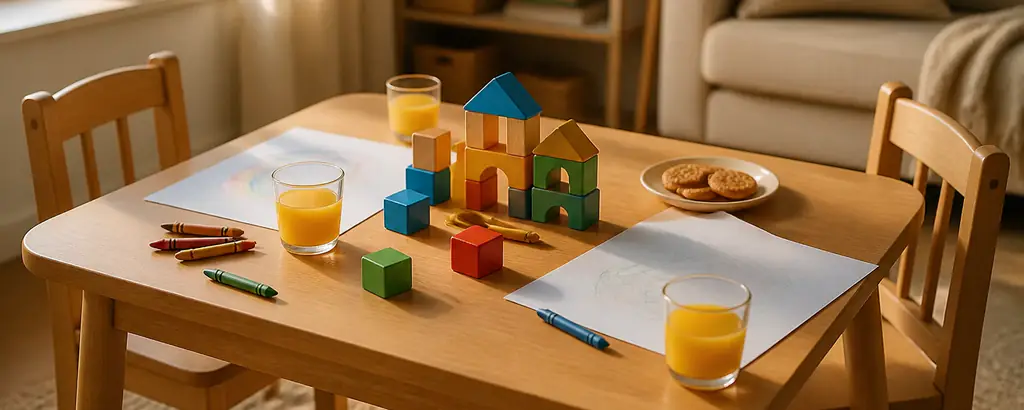
Put paper and crayons at one spot and a small selection of blocks nearby. Children can begin separately, watch one another, or move between the options. Joining in does not have to mean sharing one item from the first minute.
An adult can make an introduction through the materials: “There is space to build another house here.” Avoid forcing a joint plan before both children are ready.
Build two homes and one road
Each child builds a home for a toy, then they decide whether to connect the homes with a road. One can design a bridge while the other makes a store. If the connection becomes frustrating, the homes can stay separate and the toys can visit later.
Use enough basic pieces for both children. A few duplicate materials often make the setup simpler than one highly desirable prop.
Make a picture with separate corners
Give each child a corner of a large sheet, or separate sheets that can be placed together. Choose a broad theme such as a city or an imaginary island. They can connect their pictures when they want to, and agree before drawing over someone else's work.
This allows a shared result without requiring everyone to make the same thing. Add a tour at the end if the children want to explain their parts.
Open two counters in a pretend shop
One counter sells toy vehicles, another sells drawings of food. Children take turns visiting each other's businesses, or an adult becomes the customer. If both want to run the same counter, create another customer job or swap after a clearly defined order.
Our role-play ideas include opening lines when the game needs a little help.
Keep a short reset game ready
If play gets stuck, offer a simple change: roll a soft ball to each other, copy three gentle movements, or look for something round in the room. Offer a break as well. Children do not need to stay in cooperative play for the entire visit.
Make the ending predictable
Give a little warning before pickup and choose one final action, such as parking the toys or showing a drawing. Return belongings and let each child keep their own creation. Next time, repeat what worked instead of inventing a whole new visit. For more shared games, see indoor games.
When children have different ages or want different jobs, our sibling activities guide offers shared setups with separate roles that also work for friends. If you want one complete cooperative game, use the indoor picture hunt.
FAQ
What if children play alongside each other instead of together?
That can be a workable way to share the visit. Offer similar materials and opportunities to connect without forcing a joint game.
What if both children want the same toy?
Help them agree on a clear turn, offer a comparable alternative, or put the disputed item aside temporarily. Stay nearby to support the situation rather than expecting them to solve every conflict alone.