
Music and Rhythm Activities for Kids Without Instruments
Published
Music activities do not need an instrument collection or a loud room. A voice, a pair of hands, and a repeating beat are enough. These games for children around ages 4–6 can be played seated or standing, with a comfortable volume and room to stop.
Begin with one short game. Let children listen before joining, and agree on a clear stop signal. If anyone is sensitive to sound, offer a silent conducting role or use small hand movements instead.
1. Send a rhythm around
Clap twice, pause, then invite your child to send the pattern back. Start slowly. Change one thing in the next round: one clap becomes a tap on your knees, or the pause gets longer. Swap leaders so you copy their rhythm too.
For a group, pass the same pattern from person to person. If it changes along the way, listen to the new version rather than restarting until everyone gets it right.
2. Conduct a hand orchestra
Choose two gentle sounds, such as rubbing palms and tapping fingertips on a leg. One person points to which sound comes next and raises an open hand for silence. Your child can invent signs for faster, slower, or softer.
Avoid sudden loud surprises. The conductor can also lead a completely silent round in which everyone performs the motions without making sound.
3. Make a song for an ordinary job
Use a familiar tune or invent a short chant about putting socks in a basket. Repeat one line while you do the action. Invite your child to replace a word with something silly, then sing the new version.
The song does not have to rhyme. A repeated phrase with a clear beat is enough to make it easy to join.
4. Move, pause, and pose
Hum a tune while everyone moves gently in their own space. Stop humming and choose a pose together. Nobody is out for moving. Let children hum, conduct, or stay seated and move only their hands. Clear the floor before starting and keep the pace manageable indoors.
5. Build a sound story
Tell a short journey: rain begins, footsteps cross a bridge, and a door opens. Give each event a sound made with voices or hands. Tell the story again and let your child supply the effects. In the next round, they choose the order or introduce a new place.
Keep homemade instruments simple
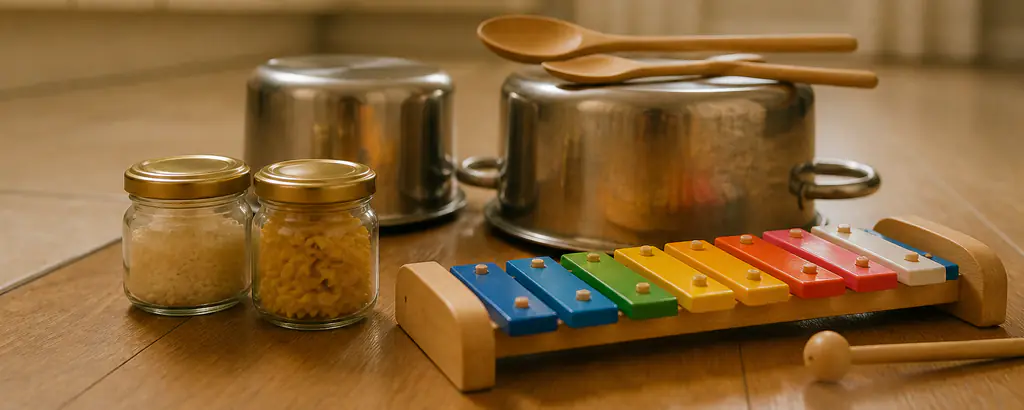
Hands and voices avoid loose fillers, lids, and cords altogether. If you use an instrument you already own, check its age guidance and condition. You do not need to make rice-filled bottles or glass-jar shakers for these games.
For another way to tell a story, try imaginative play. For a gentle finish after moving, switch to quiet time activities.
FAQ
What if my child does not copy the beat accurately?
Slow down, shorten the pattern, or copy their beat instead. These are shared games, not music assessments, and an invented rhythm can lead the next round.
Can music games work in an apartment?
Use finger taps, palm rubbing, humming, and seated movements. Skip stamping and banging objects, and keep the volume comfortable for everyone nearby.